Vegan Pesto and Pea Rigatoni
Highlighted under: Global Flavors
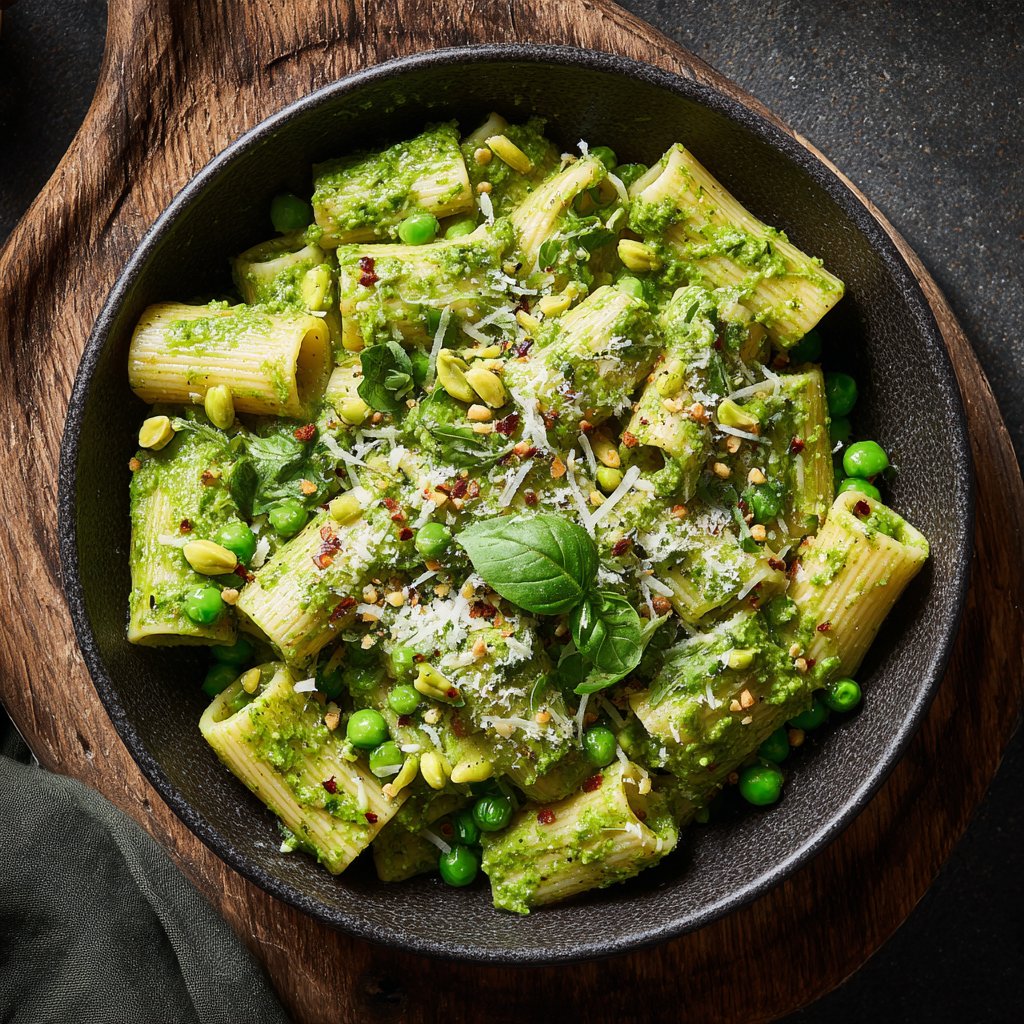
I love whipping up a quick yet satisfying dish like Vegan Pesto and Pea Rigatoni when I'm pressed for time. The creamy pesto, made entirely from fresh ingredients, comes together in a matter of minutes, and the addition of sweet green peas elevates the dish both in taste and texture. It’s not just a meal; it’s a burst of flavor that brings the bright essence of spring onto my plate, making it a delightful choice for any day of the week.
When I first tried making vegan pesto, I was amazed at how delicious and fresh it turned out. The secret, I've found, is to use freshly picked basil and a good-quality olive oil. This not only enhances the flavor but also gives the pesto a vibrant color that brightens up any dish. My favorite part is adding green peas for that extra sweetness and a pop of color, making the rigatoni just a bit more special.
Watching the peas soften just slightly while the pasta cooks fills my kitchen with a lovely aroma. Pairing it with the nutty depth of the pesto is a match made in heaven. It's the perfect dish for weeknight dinners, and I often find myself savoring the leftovers for lunch the next day!
Why You'll Love This Recipe
- Bursting with fresh basil flavor that awakens the senses
- Creamy and satisfying while being completely plant-based
- Quick recipe that’s perfect for busy weeknights or meal prep
Understanding the Pesto Process
Making the vegan pesto is a critical step that sets the foundation for the entire dish. The key is to achieve a smooth, creamy texture without dairy. To do this efficiently, ensure that your food processor is sharp and clean. When adding olive oil, drizzle it in slowly as the machine runs; this emulsifies the ingredients effectively, resulting in a glossy pesto. If your pesto seems too thick, feel free to add a splash of water to reach your desired consistency.
One important aspect of this recipe is the balance of flavors in the pesto. Fresh basil provides a vibrant taste that should shine through; however, if you want a more intense flavor, consider adding a bit of arugula or spinach to the mix. Nutritional yeast not only complements the nuttiness of the pine nuts but also adds that cheesy flavor without any dairy. Adjust the salt and pepper at the end to enhance these flavors, tasting as you go.
Cooking the Rigatoni and Peas
Cooking the rigatoni perfectly is essential for optimal texture in this dish. Follow the package instructions closely, usually around 10-12 minutes, but check a minute or two earlier to ensure it's al dente. It's important to stir occasionally during cooking to prevent the pasta from sticking. Adding the frozen peas during the last two minutes ensures they remain vibrant and fresh while warming through without losing their bright color or texture.
When draining the pasta, make sure to reserve a cup of the pasta cooking water. This starchy water can be a lifesaver when mixing the rigatoni and pesto. If you find the pasta is too thick once combined, a splash of this water can help loosen it while also adding a glossy finish. It’s a simple trick that elevates the creaminess of the dish.
Serving and Storing Tips
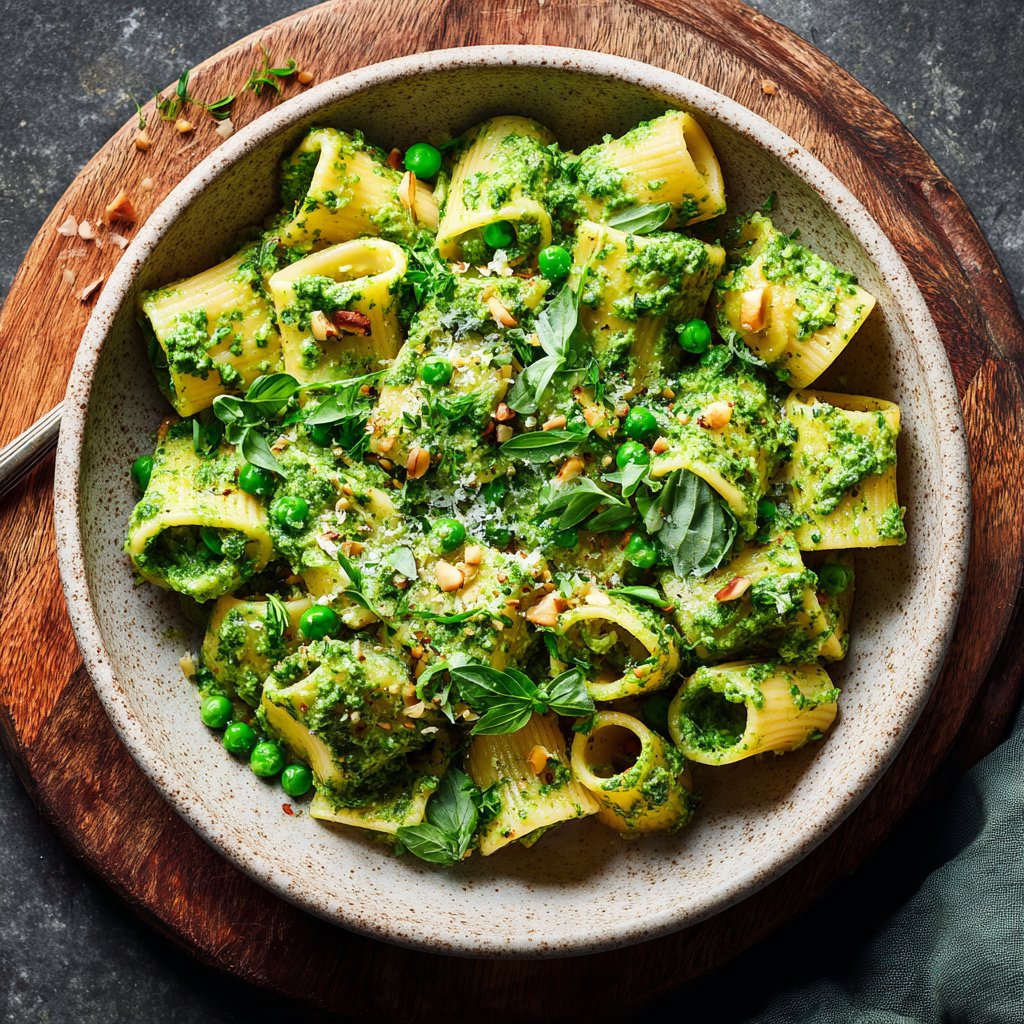
As you serve this Vegan Pesto and Pea Rigatoni, consider adding a sprinkle of freshly cracked pepper or lemon zest for an extra pop of flavor. The optional pine nuts can also be toasted lightly in a dry skillet for a minute or two to bring out their nutty profile before garnishing—this step truly takes the dish to another level. Serve it warm, but it’s also enjoyable cold as a pasta salad, making it versatile for different occasions.
If you have leftovers, store them in an airtight container in the fridge for up to three days. Reheating can be done gently on the stove over low heat; just add a splash of water or olive oil to keep it from drying out. For longer storage, you can freeze the pesto separately. Just make sure to leave out the peas until you're ready to enjoy it again, as they don’t freeze well.
Ingredients
For the Pesto
- 2 cups fresh basil leaves
- 1/2 cup pine nuts
- 3 cloves garlic
- 1/2 cup nutritional yeast
- 1/2 cup olive oil
- Salt and pepper to taste
For the Rigatoni
- 12 oz rigatoni pasta
- 1 cup frozen peas
- Juice of 1 lemon
- Optional: extra pine nuts for garnish
Instructions
Prepare the Pesto
In a food processor, combine basil leaves, pine nuts, garlic, and nutritional yeast. Pulse until finely chopped. With the processor running, slowly drizzle in olive oil until fully blended. Season with salt and pepper to taste.
Cook the Pasta
In a large pot, bring water to a boil. Add rigatoni and cook according to package instructions. During the last 2 minutes of cooking, add the frozen peas.
Combine Everything
Drain the pasta and peas, then return them to the pot. Stir in the prepared pesto and lemon juice until all the pasta is evenly coated.
Serve
Divide the rigatoni among plates, sprinkle with extra pine nuts if desired, and enjoy!
Pro Tips
- For a creamier texture, you can add a splash of pasta cooking water to the pesto before mixing it with the rigatoni.
Ingredient Substitutions
If you don't have pine nuts on hand, walnuts, sunflower seeds, or cashews can serve as excellent alternatives for the pesto, each bringing its unique flavor and texture. When choosing nuts, keep in mind that walnuts will impart a slightly earthier taste, while cashews add a creamier consistency. Additionally, for a nut-free version, you can replace nuts with extra nutritional yeast or hemp seeds, which will still provide nutrients and flavor without allergens.
Another easy substitution is using spinach instead of fresh basil. While the flavor will be different, it still results in a lovely green pesto. If you're looking for a kick, try adding a couple of red pepper flakes to the mix for a touch of heat, or a handful of nutritional yeast if you want to boost the umami flavor.
Scaling Up the Recipe
This Vegan Pesto and Pea Rigatoni recipe is easily scalable. For larger gatherings, simply double or triple the ingredients, especially the pesto, which can be made in bulk and stored in the fridge for up to a week. One tip when scaling up is to ensure your food processor has enough capacity to blend larger volumes effectively; otherwise, consider making the pesto in batches to maintain the creamy texture.
Moreover, if you're cooking for a crowd, consider serving this dish in a large, shallow bowl rather than individual plates. Making a big batch allows everyone to help themselves, and it encourages a more communal dining experience. Lastly, set out optional toppings like fresh lemon wedges or additional nutritional yeast to let guests personalize their servings.
Questions About Recipes
→ Can I use other nuts for the pesto?
Yes, walnuts or almonds work well as alternatives to pine nuts.
→ How can I store leftovers?
Store in an airtight container in the refrigerator for up to 3 days.
→ Is this recipe gluten-free?
You can use gluten-free pasta to make this dish suitable for a gluten-free diet.
→ Can I freeze the pesto?
Yes, pesto freezes well. Just store it in ice cube trays and pop out what you need later!
Vegan Pesto and Pea Rigatoni
Created by: The Dishdune Team
Recipe Type: Global Flavors
Skill Level: Easy
Final Quantity: 4 servings
What You'll Need
For the Pesto
- 2 cups fresh basil leaves
- 1/2 cup pine nuts
- 3 cloves garlic
- 1/2 cup nutritional yeast
- 1/2 cup olive oil
- Salt and pepper to taste
For the Rigatoni
- 12 oz rigatoni pasta
- 1 cup frozen peas
- Juice of 1 lemon
- Optional: extra pine nuts for garnish
How-To Steps
In a food processor, combine basil leaves, pine nuts, garlic, and nutritional yeast. Pulse until finely chopped. With the processor running, slowly drizzle in olive oil until fully blended. Season with salt and pepper to taste.
In a large pot, bring water to a boil. Add rigatoni and cook according to package instructions. During the last 2 minutes of cooking, add the frozen peas.
Drain the pasta and peas, then return them to the pot. Stir in the prepared pesto and lemon juice until all the pasta is evenly coated.
Divide the rigatoni among plates, sprinkle with extra pine nuts if desired, and enjoy!
Extra Tips
- For a creamier texture, you can add a splash of pasta cooking water to the pesto before mixing it with the rigatoni.
Nutritional Breakdown (Per Serving)
- Calories: 350 kcal
- Total Fat: 22g
- Saturated Fat: 3g
- Cholesterol: 0mg
- Sodium: 220mg
- Total Carbohydrates: 44g
- Dietary Fiber: 6g
- Sugars: 2g
- Protein: 10g